
RTM: resin transfer molding.
The dry reinforcement is placed in a closed mold and resin is injected under pressure. Two finished faces, controlled thickness and identical parts one after another. We make both the RTM mold and the part.
Two good faces and repeatable parts.
RTM is the choice when the part needs a finish on both faces, controlled thickness or a production run with consistent quality. Because the mold is closed, the process is clean and highly repeatable.
We have RTM pumps and heated platen presses to inject and cure in the mold itself.
- Finish on both faces
- Controlled thickness and weight
- Short and medium runs
- Test coupons and test parts
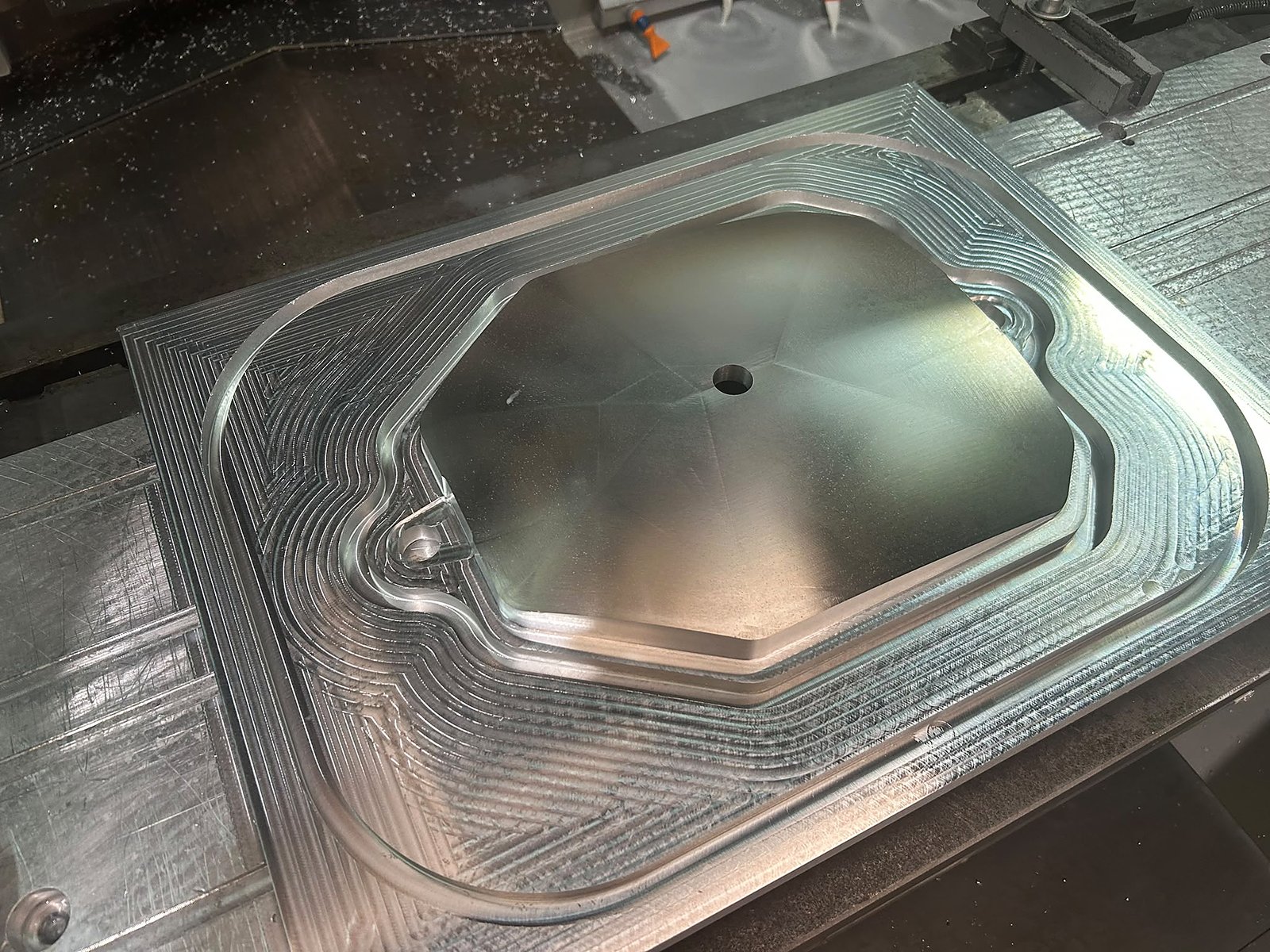
RTM molds machined and measured in-house.
An RTM mold has to seal well, withstand injection pressure and give the exact thickness. We machine it in aluminum on our 5-axis machining centers, with injection channels and vents, and verify it before the first shot.
Real example: an aluminum RTM mold for making ballistic test coupons for the defense sector. See the project.
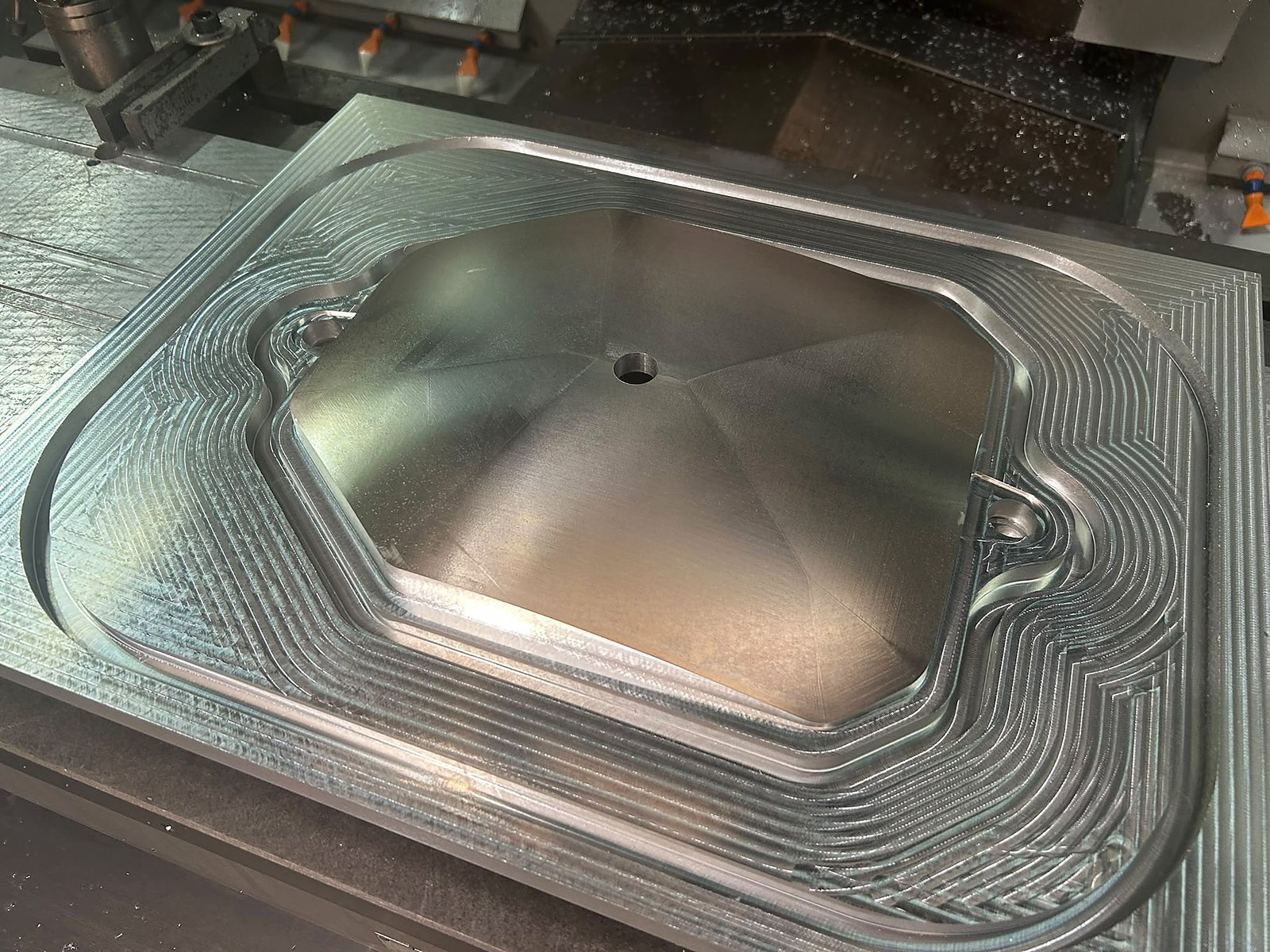
Aluminum RTM mold for ballistic testing
CNC-machined aluminum mold for producing composite test specimens and structural components by RTM, intended for ballistic testing in the defense sector.
TechnologiesResin infusion
Large parts with a good fiber-to-resin ratio, without prepreg.
TechnologiesMolds and tooling
Molds and patterns up to 8 × 3 × 2 m, measured before delivery.
TechnologiesComposite trimming and machining
KUKA robots and 5-axis up to 8 m for trimming and drilling composites.
Technical articlesPrepreg, infusion or RTM
A practical comparison to choose the process by part, run size and budget.
Send us your drawing or 3D model, and we’ll bring it to life.
We study your project with the same care you put into designing it, then send you a clear proposal covering process, lead time and price. Only have the physical part? We’ll scan it and take it from there.
What customers ask us most.
What is the difference between RTM and infusion?
RTM uses a closed, two-sided mold and pressure injection; infusion uses an open mold with a vacuum bag. RTM gives a finish on both faces and more repeatability; infusion molds are cheaper.
Do you make RTM molds for us to inject ourselves?
Yes. We machine the mold, measure it and deliver it ready for production.
What material do you make RTM molds from?
Usually aluminum, for its thermal conductivity and its resistance to injection pressure. Depending on the run, another material can be considered.
For what volumes does RTM make sense?
It makes sense when there are several identical parts or when two finished faces are needed. For a single large part, infusion or hand lay-up is usually more economical.