
Composite molds: tooling board or aluminum?
Short answer: tooling board for prototypes, patterns and short runs at moderate temperature; aluminum for production runs, RTM, pressure and temperature. But there are nuances worth knowing before you order the mold.
Carbodynamic engineering team · Published on
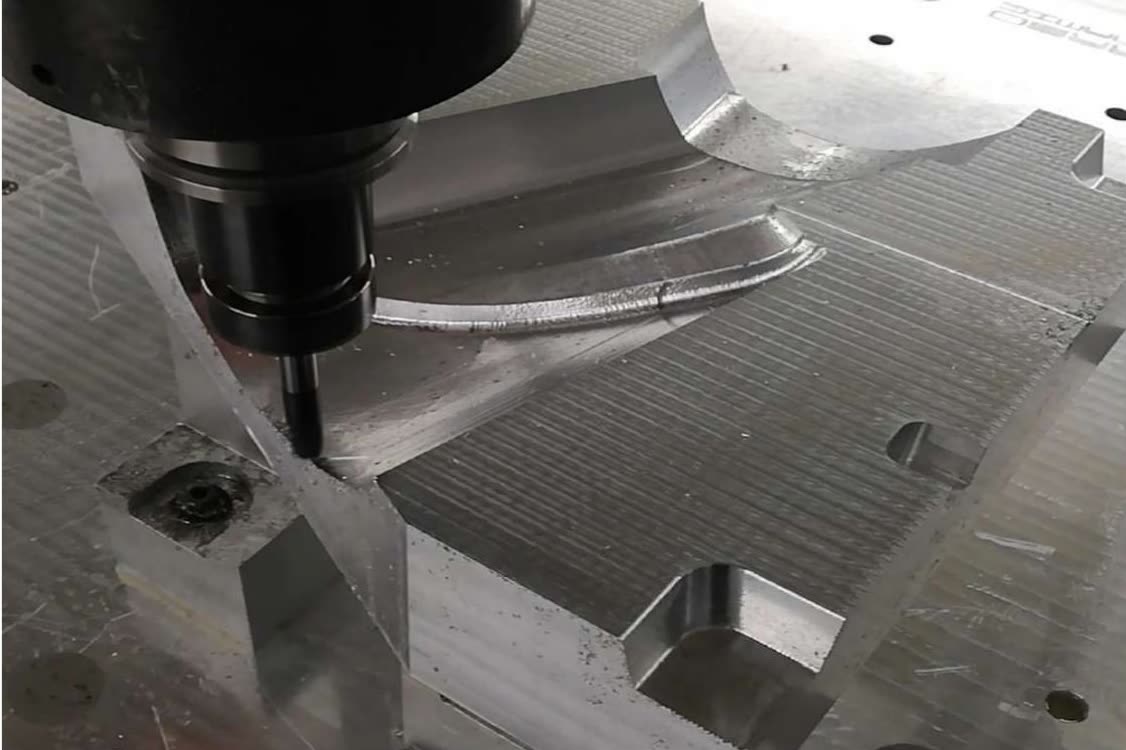
Tooling board
Epoxy or polyurethane resin blocks that machine very quickly with a good finish. They are the fastest, most economical way to get a mold or a pattern.
- Fast to machine and cheaper
- Very good for patterns and prototype molds
- Withstands fewer cycles and lower temperatures, depending on the grade
- Requires proper sealing and release agent
Aluminum
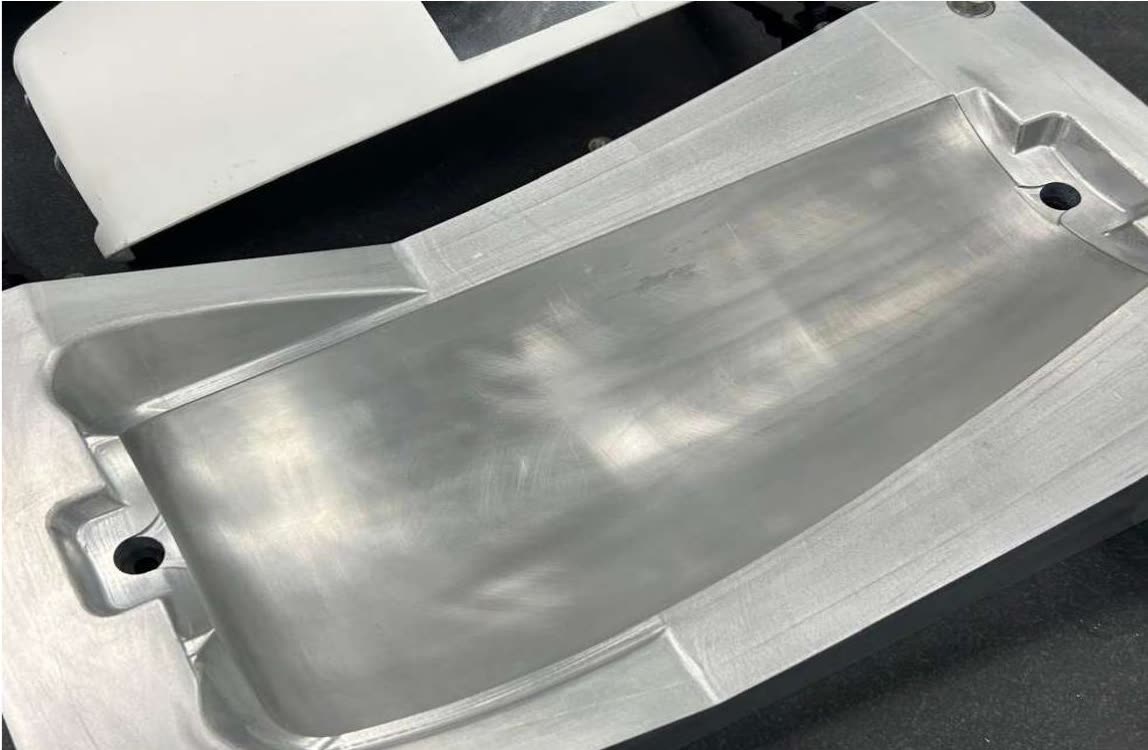
More expensive and slower to machine, but it withstands many cycles, injection pressure and temperature, and conducts heat well, which speeds up curing.
- Medium and long production runs
- RTM molds and closed molds
- Good thermal conductivity
- Expands more than carbon fiber: must be taken into account on long parts
Comparison
There are more options: cast tooling for very long runs, and fiberglass or carbon fiber molds pulled from a pattern, which are lightweight and expand similarly to the part. We machine all of them on 5 axes, up to 8 × 3 × 2 m, and measure them before delivery.
| Tooling board | Aluminum | |
|---|---|---|
| Mold cost | Low–medium | Medium–high |
| Machining lead time | Short | Medium |
| Number of parts | Few | Many |
| Pressure (RTM) | Not recommended | Yes |
| Thermal conductivity | Low | High |
| Expansion vs carbon | Depends on the grade | Higher: compensate on long parts |
Molds and tooling
Molds and patterns up to 8 × 3 × 2 m, measured before delivery.
TechnologiesRTM
Closed mold, two finished faces and repeatability in production.
CarbodynamicCNC Machining
3-, 4- and 5-axis CNC machining with travels up to 8 × 3 × 2 m in Alicante, Spain: molds, models, tooling, technical parts and CNC turning. Request a quote.
Technical articlesPrepreg, infusion or RTM
A practical comparison to choose the process by part, run size and budget.
Send us your drawing or 3D model, and we’ll bring it to life.
We study your project with the same care you put into designing it, then send you a clear proposal covering process, lead time and price. Only have the physical part? We’ll scan it and take it from there.
What customers ask us most.
How many parts can a tooling board mold produce?
It depends on the material grade, the temperature and how carefully parts are demolded. It is enough for short runs; for long runs, aluminum or composite is a better choice.
Why does mold expansion matter?
Because the mold is measured cold but the part cures hot: if mold and part expand differently, the part can come out with different dimensions, especially on long parts.
Can you make just the mold for me?
Yes, machined and measured, so you can do the lay-up yourself. In complete confidentiality.